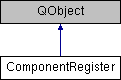
The component register reflects and manages the current state of all components and Hyperion as a whole It emits also real component state changes (triggert from the specific component), which can be used for listening APIs (Network Clients/Plugins)
More...
#include <ComponentRegister.h>
The component register reflects and manages the current state of all components and Hyperion as a whole It emits also real component state changes (triggert from the specific component), which can be used for listening APIs (Network Clients/Plugins)
§ componentStateChanged
| void ComponentRegister::componentStateChanged |
( |
const hyperion::Components |
comp, |
|
|
const bool |
activated |
|
) |
| |
|
slot |
is called whenever a component change a state, DO NOT CALL FROM API (use hyperion->setComponentState() instead)
- Parameters
-
| comp | The component |
| state | The new state of the component |
§ isComponentEnabled()
Check if a component is currently enabled.
- Parameters
-
| comp | The component from enum |
- Returns
- True if component is running else false. Not found is -1
§ setHyperionEnable()
| bool ComponentRegister::setHyperionEnable |
( |
const bool & |
state | ) |
|
Enable or disable Hyperion (all components)
- Parameters
-
- Returns
- Returns true on success, false when Hyperion is already at the requested state
§ updatedComponentState
Emits whenever a component changed (really) the state.
- Parameters
-
| comp | The component |
| state | The new state of the component |
The documentation for this class was generated from the following files: